
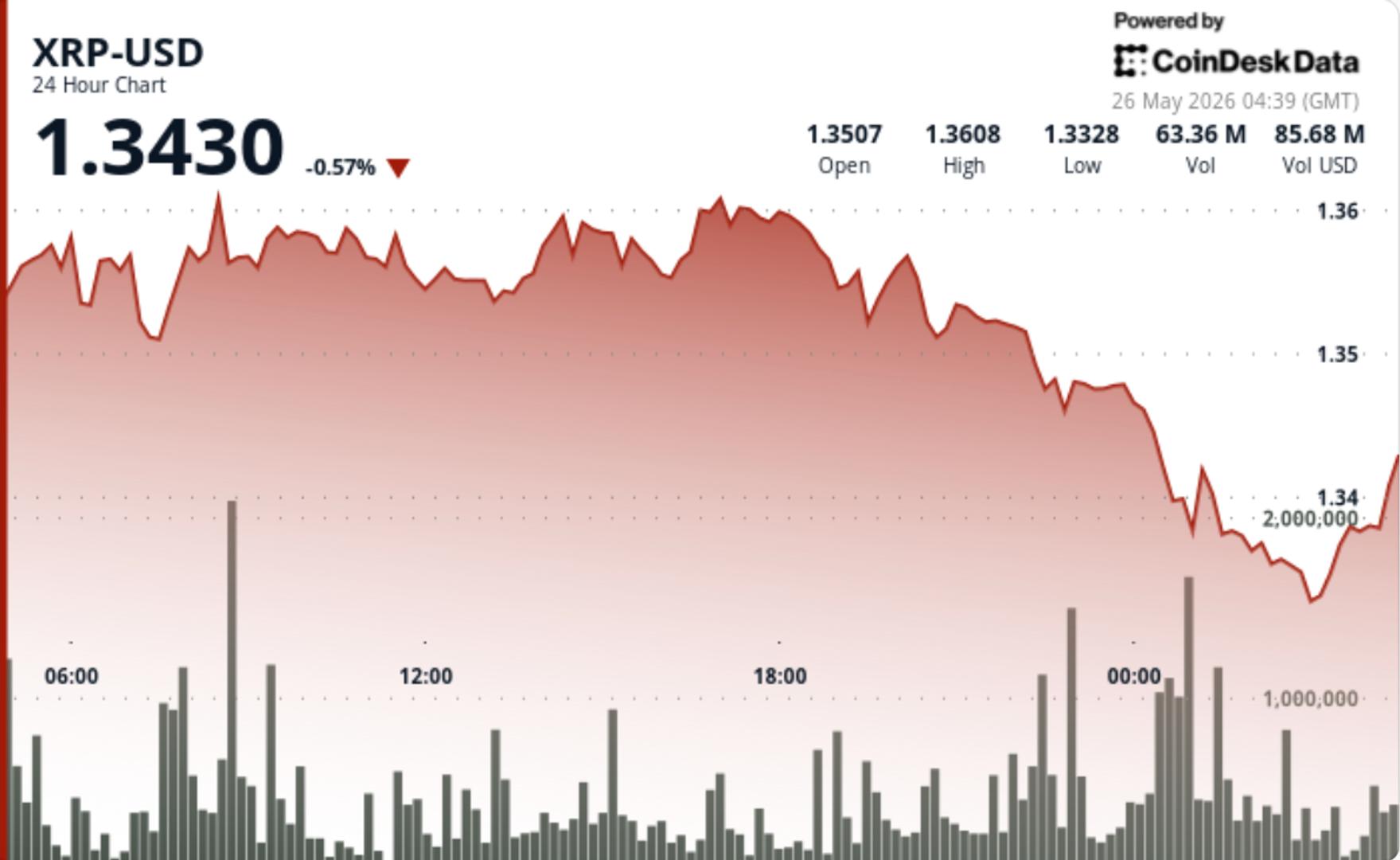
XRP spent several weeks tightening in a narrow range, but the market finally started to trend lower after another failed push above the resistance level near $1.36. The move matters because repeated tests of support weaken buyers over time, and XRP is now heading back towards the same $1.30 area that traders have regarded as the line between consolidation and the risk of a broader breakout.
news background
• Analysts are divided on the structure of XRP, with some calling the latest move a confirmed triangle breakdown, while others still consider it a late-stage compression before a bigger breakout.
• CME Group is preparing to launch 24/7 XRP-linked futures trading later this month, adding another layer of institutional exposure to the token.
• Whale activity also declined sharply during this period, with the number of large transactions falling by more than 57% in nine days.
price action summary
• XRP fell from $1.3457 to $1.3366 during the 24-hour session, while it traded within a relatively tight 1.9% range.
• The biggest move came after a failed breakout attempt near $1.3620, where increased volume quickly turned into selling pressure.
• XRP later broke below the $1.35 level and consolidated near session lows at $1.336.
technical analysis
• The drop below $1.35 strengthened short-term bearish momentum after weeks of tightening price action.
• XRP is now trading below several key moving averages, while resistance near $1.36 continues to reject upside attempts.
• Some analysts see the recent move as a confirmed symmetrical triangle break with downside risks towards $1.14.
• Others still argue that the broader structure resembles a compression rather than a complete collapse, especially as XRP remains above the crucial $1.30 support zone.
What should traders look for
• $1.30-$1.31 is now a key support area. Losing it is likely to accelerate the decline.
• $1.35 becomes the immediate resistance area that XRP needs to recapture to stabilize the near-term structure.
• CME’s upcoming XRP futures launch could increase volatility and improve liquidity when trading begins later this month.