
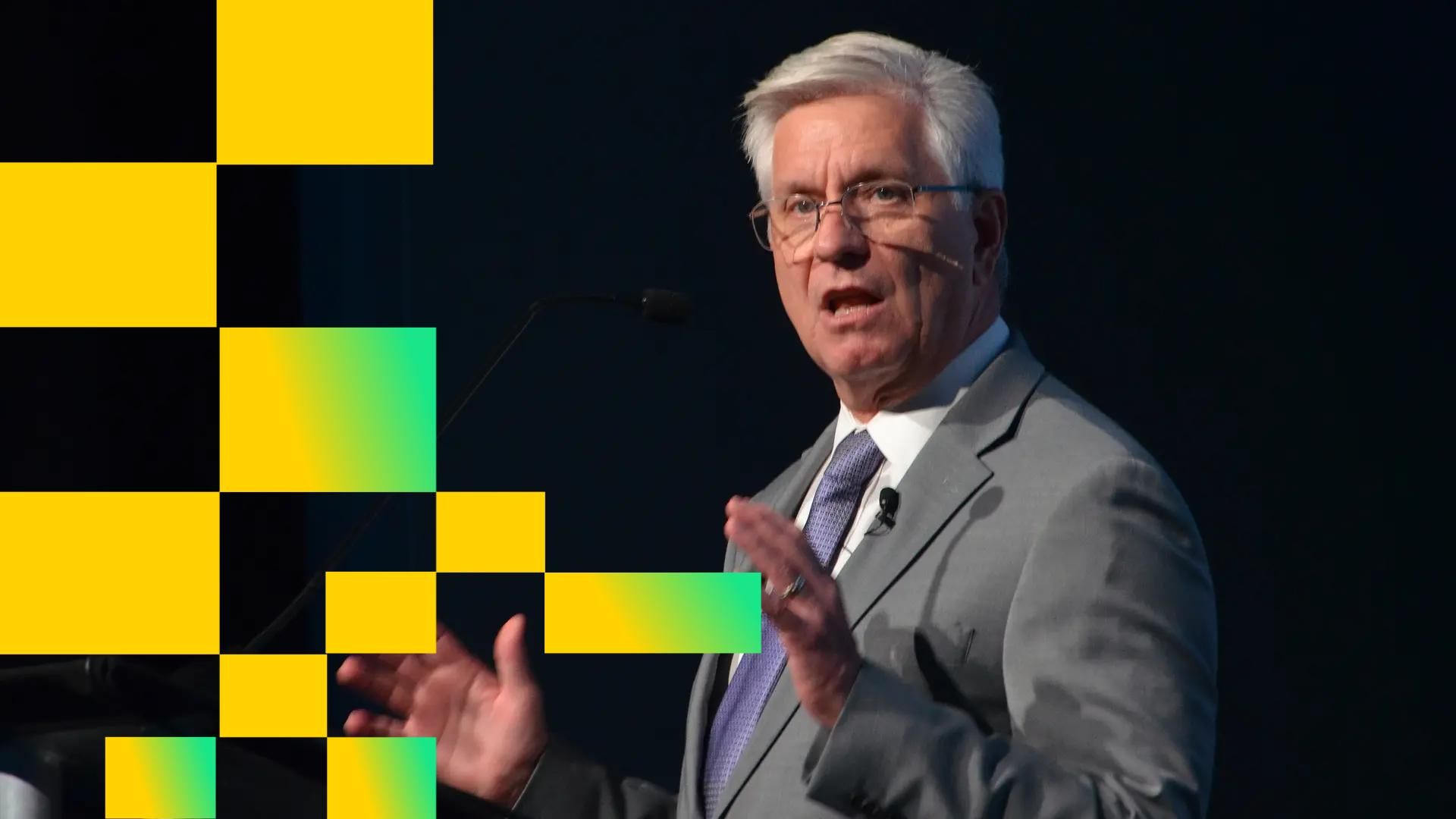
Federal Reserve Governor Christopher Waller floated the idea of the central bank creating a “skinny master account” for crypto firms that would give them access to the Fed’s payments rails while keeping them off the full Fed master account.
You’re reading State of Crypto, a CoinDesk newsletter that explores the intersection of cryptocurrencies and government. Click here to sign up for future editions.
Explanation
Federal Reserve Governor Christopher Waller suggested this week that crypto companies could use a limited version of the Fed’s master account system, which would allow these companies to access US payments rails while limiting their exposure to the risks the Fed would want to avoid.
why it matters
Firms like Custodia have already spent years trying to gain access to a Fed master account, which would give them a direct line to the central bank’s payments infrastructure and relieve them from needing to work with an intermediary bank. Waller’s proposal for more limited access could particularly benefit stablecoin issuers (and by extension, the broader crypto sector).
break it
Under Waller’s proposal, which he called a “skinny master account,” the Fed would allow companies to access its payments rails, but not “the full suite of Federal Reserve financial services,” he said during his opening remarks at the Fed’s Payments Innovation Conference on Tuesday.
“To control the size of accounts and the related effects on the Fed’s balance sheet, the Reserve Bank will not pay interest on balances in payment accounts, and balance caps may be imposed,” Waller said. “These accounts will not have daylight overdraft privileges – if the balance reaches zero, payments will be declined. They will not be eligible for discount window lending or have access to all Federal Reserve payment services, for which the Reserve Bank cannot control the risk of daylight overdraft.”
Linda Zeng, CEO of Digital Self Labs and a lecturer at Georgetown University, compared Waller’s proposal to the idea of narrow banks, which function as banks but do not lend money.
“Payment stablecoin issuers already operate as a narrow bank – holding fully backed reserves and facilitating payments rather than lending. Yet the GENUINE Act does not provide them with direct access to the Fed payments rail, a move that would integrate these stablecoin issuers into the US monetary system,” he wrote in an opinion article for CoinDesk.
This would have the additional benefit of ensuring that stablecoin issuers are backed by the Fed itself, he wrote, giving the Fed more tools to manage any potential systemic risks.
Waller’s proposal could particularly benefit stablecoin issuers, especially in light of the Genius Act and the rapid ongoing growth of this segment of the crypto market. Many companies have already applied for master account access in hopes of moving beyond working with third-party banks.
Former World Bank President David Malpass said at ACI Worldwide’s Payments Summit that the proposal, if enacted, would help “protect the purchasing power of the dollar,” according to a transcript of his remarks shared with CoinDesk.
“There is global competition for market share in stablecoins,” he said.
“This is just a prototype idea to provide some clarity on how things might change,” Waller said in his speech.
Waller added, “As the Federal Reserve staff examines this idea, we will engage with all interested stakeholders to hear perspectives on the benefits and shortcomings of this approach.” “You’ll hear more about it soon.”
Thursday
- 14:00 UTC (10:00 am ET) The Senate Banking Committee said it will hold nomination hearings on several candidates, including Travis Hill to be chairman of the Federal Deposit Insurance Corporation (Hill is currently acting chairman).
If you have ideas or questions about what I should discuss next week or have any other feedback you’d like to share, feel free to email me [email protected] Or find me at Bluesky@nikhileshde.bsky.social.
You can also join group conversations on Telegram.
See you next week!