
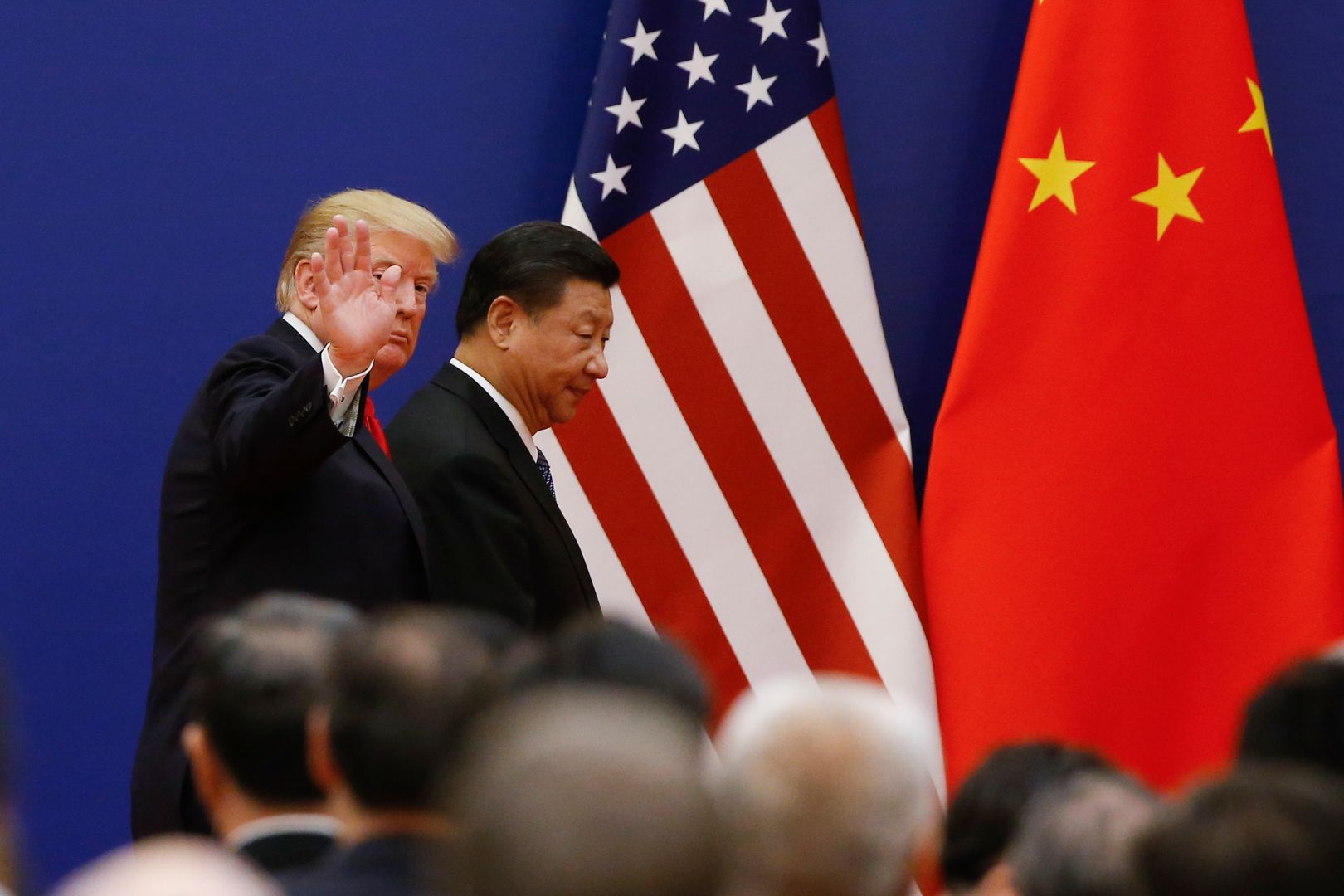
Bitcoin reversed some of its post-Fed losses early Thursday after a meeting between President Donald Trump and his Chinese counterpart Xi Jinping yielded a favorable outcome.
Speaking aboard Air Force One, the US President also said that it was a one-year agreement which will be extended. Trump also said that the issue of rare earths has been resolved and there will be no further restrictions on them.
Trump also said that US tariffs on China would be reduced from 57% to 47%. In comments seen by Reuters he said he would visit China in April and Xi would visit the United States sometime after that.
BTC briefly fell to $108,000, capped by an overnight decline from $113,000 to $110,000, which Federal Reserve Chairman Jerome Powell downplayed the certainty of a rate cut in December.
xrp and Losses among major companies were offset by a 4% decline. ether Solana’s SOL, BNB and Cardano’s ADA showed losses of up to 3%.
Futures tied to the S&P 500 were also trading lower, while the dollar index consolidated near 99.00 with overnight gains.
According to BBC, Trump has left South Korea without announcing the outcome of his talks with Xi. “They shook hands at the end of the meeting before departing,” the BBC reported.
Expectations were high after Trump said earlier this week that the two countries were close to reaching a trade deal. Trade tensions escalated recently after Trump threatened to impose 100% tariffs on Chinese goods in response to Beijing’s decision to tighten its grip on rare earth exports.
Earlier on Wednesday, the US central bank’s Federal Open Market Committee cut its benchmark overnight lending rate to a range of 3.75%-4%. The Fed said it would end a reduction in its asset purchases on Dec. 1 — a process known as quantitative tightening.
The twin policy completely changes the land in crypto’s wheelhouse. The lower benchmark rate of 3.75%-4% signals the beginning of easier financial conditions after two years of restraint, softening of real yields and risk appetite.
Bitcoin and other non-yielding assets benefit as liquidity returns and investors move from cash-heavy positions into alternative stores of growth and value.
Ending balance sheet runoff on December 1 effectively reintroduces net liquidity into the system, reducing pressure on banks and improving market depth in risk assets. That environment could promote risk-taking behavior among crypto traders and lead to renewed profit-taking in the derivatives markets.
However, the big swing factor is geopolitics. If the US-China trade deal solidifies and tariffs are further rolled back, global risk sentiment could rise, the Fed’s dovish tone could be strengthened and Bitcoin could bounce back above $115,000. But if the talks resolve, a strengthening dollar and renewed volatility could provide fresh relief to investors.
Thus, easy monetary policy and easy trade frictions create a rare alignment that supports crypto markets in November – although optimism still depends on whether this “soft landing” narrative holds once liquidity actually returns.