
Alex Thorn, head of research at Galaxy Digital, argues that the October turmoil has not broken the cycle.
The note was first sent to subscribers of Galaxy Research’s Weekly Research Brief and later reproduced on X.
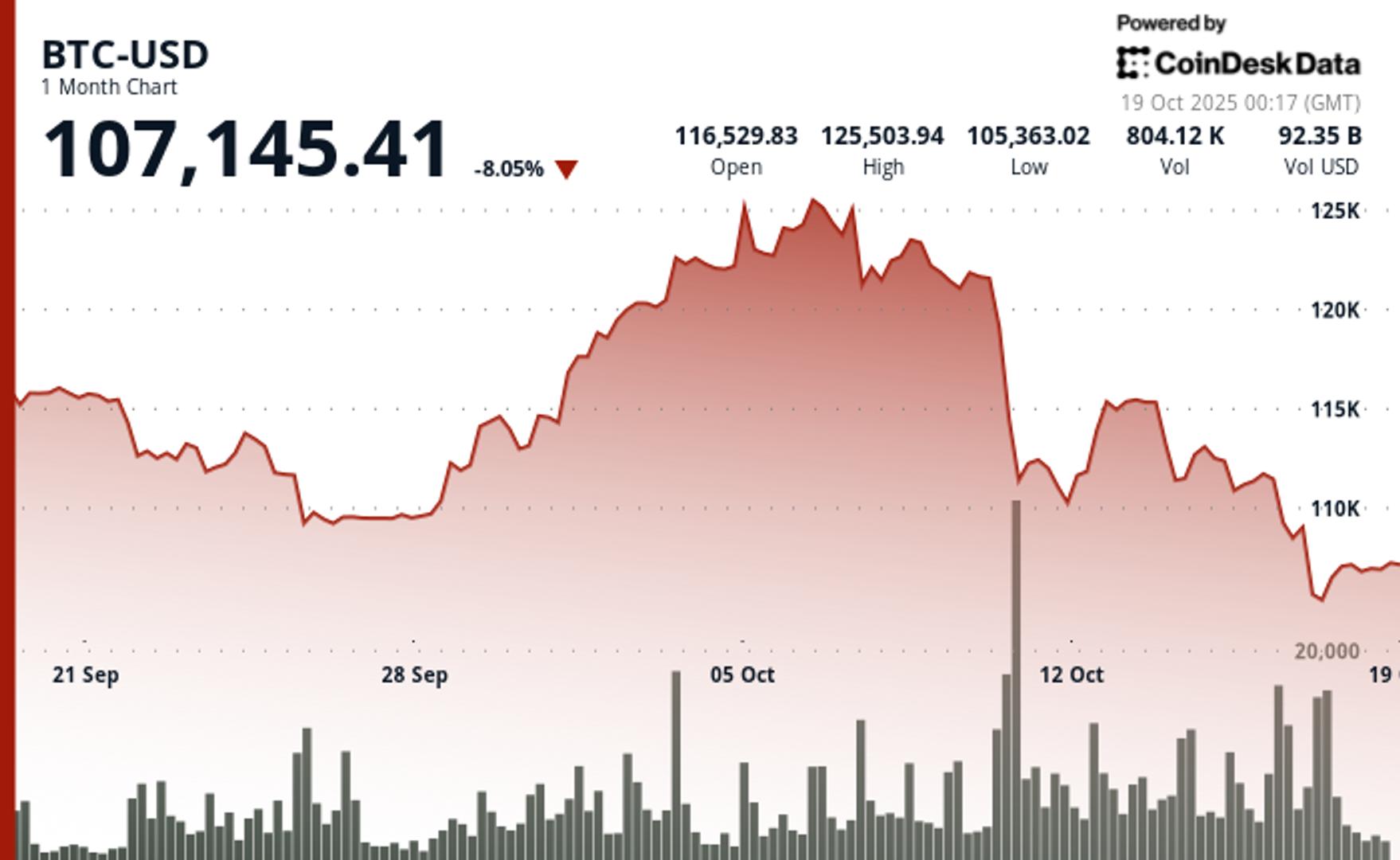
Thorne says the October 10 selloff started with a decline in low order books coupled with high leverage, then worsened as exchange auto-deleveraging limited some market-maker shorts and reduced liquidity at the worst point. He cites nearly $19 billion in liquidations as Bitcoin slipped from an Oct. 6 all-time high of $126,300 to an intraday low of $107,000, with Ether falling from $4,800 to about $3,500 before the market stabilized over the weekend.
The re-emergence of widespread panic reduced risk appetite again. Thorne points to a resumption of weakness in chip stocks, a sharp change in Federal Reserve governorships, regional-bank concerns and geopolitical noise. Classic risk-off markers strengthened the tone, he noted, with gold and silver setting new records and the 10-year Treasury yield falling below 4%.
He also flagged a crypto-specific drag: Digital asset treasury companies have been left cold. He says that with equity prices falling in that group, there has been less price-insensitive buying to deploy in crypto, which extends near-term weakness even after the initial washout.
However, in the medium term, Thorne remains constructive and highlights three forces that he says could make the next phase even more powerful.
The first is AI capital expenditure. He presents the current wave as a real-economy capital spending cycle led by cash-rich incumbents – hyperscalers, chipmakers and data-center operators – reinforced by significant US policy support, rather than a rerun of the purely speculative dot-com bubble. He argues that corporate budgets and government stances point to a longer path forward.
The second are stablecoins. Thorn explains that dollar-pegged token payment rails are gaining traction as they broaden participation, deepen liquidity, and spur more activity on public chains. He believes that plumbing effects can support the ecosystem even if price action declines.
The third is tokenization. According to Thorne, moving real-world assets and pieces of traditional market infrastructure on-chain is moving from pilot to implementation, creating new demand for the block space and core assets that secure, route and organize that activity. Thorn says the transition benefits the platforms associated with that flow.
Against that backdrop, he remains positive on Bitcoin’s “digital gold” role amid persistent doubts about fiscal and monetary prudence. He also sees a favorable setup for majors like ETH and SOL tied to stablecoin usage and tokenization, even if near-term rallies run the risk of stalling below prior highs.
The near-term message is caution – respect low liquidity, post-crash psychology and the “wall of worry” mood. The medium-term message is resilience: Three tailwinds exist, he says, to keep the trend upward after the market has digested shocks.