
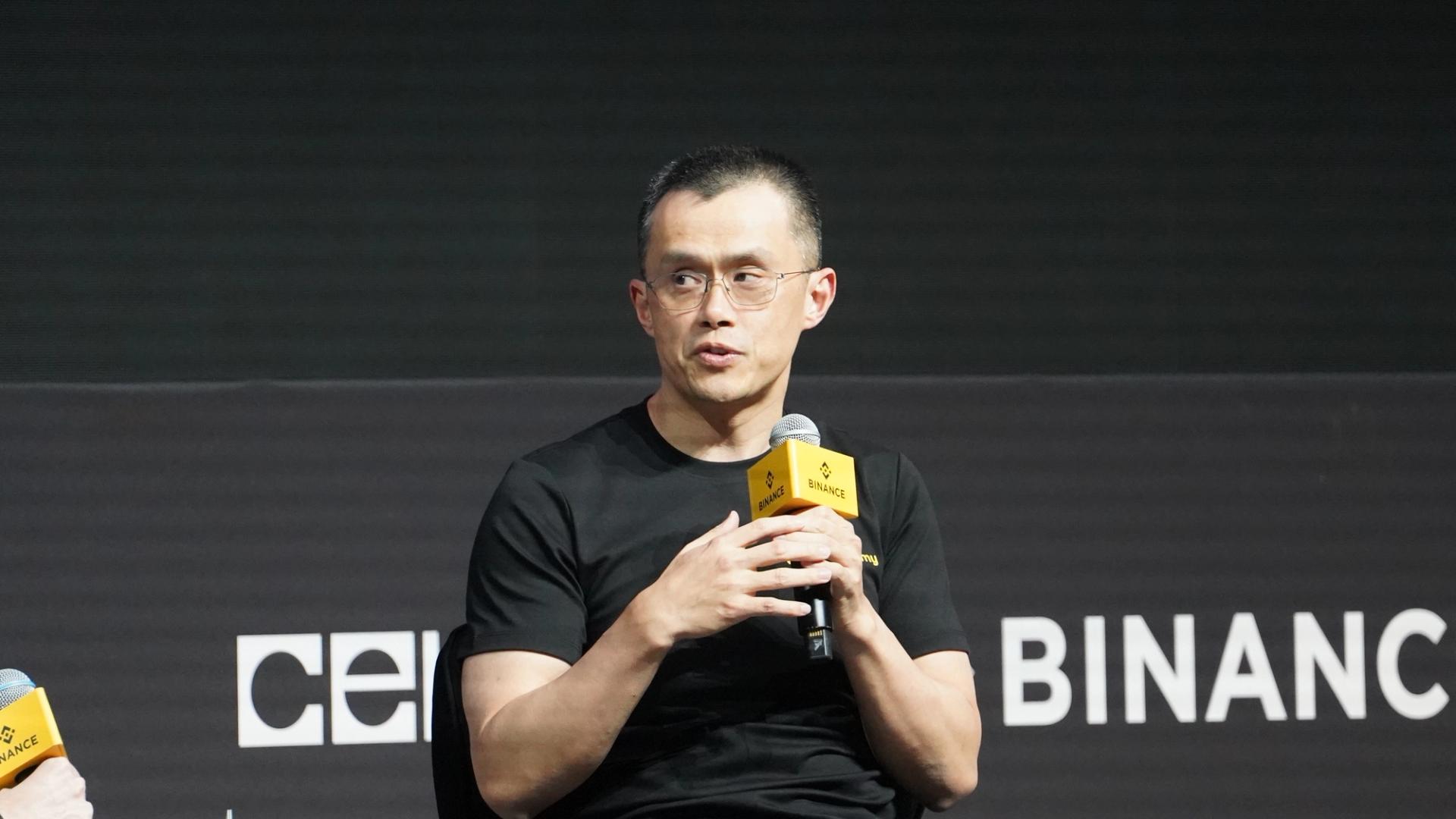
Binance founder Changpeng Zhao (CZ) says that during a phone call ahead of Binance’s attempt to acquire FTX in November 2022, Sam Bankman-Fried “casually asked him for a few billion dollars, as if he was asking for a bologna sandwich”, and that he never had any intention of doing so.
“I had no interest in owning FTX. I also had no interest in helping SBF,” Zhao wrote in his memoir. freedom of moneyReleased on Tuesday. “But we may have to take action to protect users and the industry.” He signed the non-binding letter of intent, he says, purely as a formality: “I was clear that we were not making any commitments. Our team would simply assess the numbers and then make a decision.”
Zhao is clear about where the collapse occurred. When Alameda CEO Caroline Ellison publicly offered to buy Binance’s FTT holdings at $22 each — an attempt to stabilize the market — Zhao says she made “a fatal mistake.”
“It had just revealed its lowest price,” he writes. Professional traders immediately shorted FTT through that level. The token dropped to $15, then $10, then $5. Within 72 hours, $6 billion was exited from FTX.
Zhao also revealed the existence of the “Exchange Collaboration,” a signaling group founded by FTX’s Zane Tackett during the Terra/Luna collapse earlier that year, which included Zhao, Bankman-Fried, Coinbase’s Brian Armstrong, Kraken’s Jesse Powell, and others. The group subsequently attracted scrutiny from DOJ and SEC investigators. “They were keen to find any possible signs of collusion or market manipulation between the exchanges,” Zhao writes. “Of course there was no such thing in this case.”
By November 9, Binance had walked away from the deal. Binance’s own FTT holdings — which were worth $580 million at their peak — had become “essentially worthless,” Zhao writes, echoing the company’s $1.6 billion LUNA wipe six months earlier.
This resulted in a bank run on Binance, with $7 billion withdrawn in a single day on December 14. Zhao says he spent that evening at dinner with friends. “I wasn’t worried,” he writes. “All user funds were in our reserves.” Within a month, he says, users had deposited it all back – and much more.